

Unused External IP addresses can inflate costs, making their proactive management essential for cloud cost optimization. In this post, we will explore how to automate the process of detecting and cleaning unused external IPs in GCP. An unused external IP is a static address that has been reserved but is not assigned to a resource.
Why Unused External IPs Are Expensive
Cloud providers like AWS and Google Cloud charge for external IP addresses, whether they are in use by running resources or not 1. This is also detailed in the “External IP address pricing” 2:
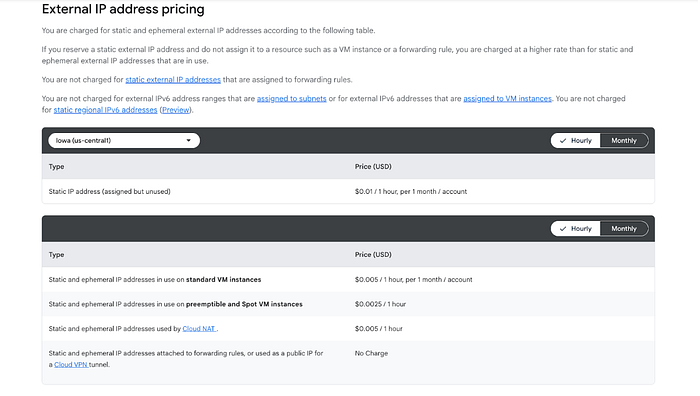
GCP External IP detailed pricing
The Problem: Leaving External IPs unused and not cleaning them automatically
Assigning an external IP address to a resource involves first reserving the external IP address and then attaching it to the resource (a VM or a forwarding rule). The external IP address is then in use by the resource.
The VM may be removed, or the forwarding rule deleted; this will leave the external IP unused. And then the costs can quickly add up. The rate is then $0.01/hour per unused external IP, compared with a used external IP, which is $0.005/hour— effectively doubling your costs per IP.
Manually cleaning the unused external IPs from the GCP console to save cost is effective but not efficient and scalable:

Filtering on “In Use by” to manually find the unused IPs is not scalable
This provides the foundation for an automated workflow that efficiently cleans up these unused external IPs.
The Solution: Automating Unused External IPs Detection and Clean-up with a CloudFlow
I created a CloudFlow blueprint 3 for Google Cloud Platform (GCP) to address this issue. The workflow automatically scans for external IP addresses not attached to any active resources — such as VMs or load balancers — flags them for review, and can optionally trigger their release.
The Suggested Workflow
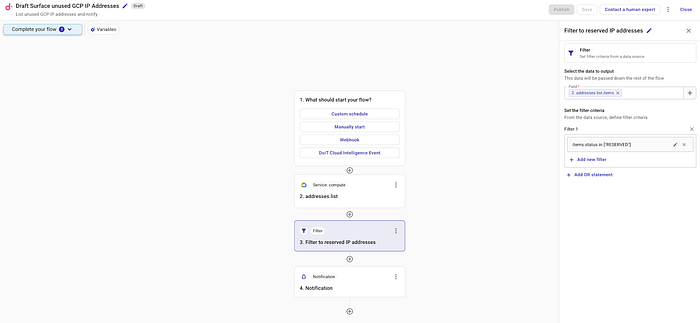
DoiT CloudFlow console IPs are filtered on the RESERVED state
The flow lists all static IP addresses in your project, and flags those in the “RESERVED” state — those not attached to any compute resource, and then alerts stakeholders or automatically releases (deletes) unused IPs 4.
Benefits of using CloudFlow include:
- Instant visibility: Quickly identify which External IP addresses in your project or organization are costing you money but aren’t being used 5.
- Easy cost recovery: Automate the release of those IPs, freeing up budget for resources that matter.
- Prevent new waste: Surface patterns where IPs are left behind after decommissioning workloads, enabling policy or tooling changes to prevent recurrence.
Conclusion and Next Steps: Surface and Cleanup Unused GCP External IP Addresses with CloudFlow Automation
Many cloud customers underestimate the impact of unused resources — such as static External IP addresses — on their monthly GCP bill.
When a static external IP address is reserved but not attached to any resource, such as a VM or forwarding rules, Google charges you at double the rate compared to a used external IP. This means forgotten IPs quietly add up to high costs over time.
Take Action: Stop paying for idle resources. Review your IP allocations today and use this CloudFlow automation to streamline your cleanup process and reduce your GCP bill.
Learn more about cost anomalies and automating optimizations by visiting doit.com/platform/cloudflow/.